
Flooding is the most common and widespread of all weather-related natural disasters.
Flood losses have averaged nearly $17 billion per year between 1990 and 2018, with total flood losses by decade having jumped from approximately $142 billion in the 1990s to nearly $210 billion in the 2000s — and through 2018 had reached roughly $141 billion.
In 2019, the National Institute of Building Sciences (NIBS) “Natural Hazard Mitigation Saves: 2019 Report” highlighted the risks that flooding and other natural hazards present to communities, and how implementing mitigation efforts — or “measures that governments, building owners, developers, tenants, and others can take to reduce the impacts of natural hazard events” — can result in significant savings.
NIBS estimated that for every $1 invested in flood mitigation, $6 are saved in post-disaster recovery costs.
With more than 1 million houses in the 100-year floodplain and given the rising frequency of flood events across the nation, it is vital that individuals and communities take action today to protect against future flooding tomorrow

1 million+ houses
number of houses in the 100-year floodplain

$17,000,000,000
average cost of flood losses per year since 1990

$1 > $6
for every $1 invested in flood mitigation, $6 are saved in post-disaster recovery costs
The Problem
There are a multitude of mitigation resources available to help individuals and communities reduce their flood risk. Unfortunately, to date, these resources have been stored across numerous federal government agency websites and other platforms, making it nearly impossible for property owners to find specific strategies tailored to their individual home or business. Additionally, mitigation documents are largely long-form paper or electronic reports. The disjointed and static nature of these mitigation resources can make it difficult for those looking to reduce their flood risk to understand where to start and how to proceed, especially following a disaster when recovery time may be limited and of the essence.

Floodwater at Mote Marine Labratory and Acquarium in Sarasota, FL. Image by Dorothy Zimmerman | Flordia Sea Grant via Flickr; licensed under CC BY-NC-ND 2.0.
Our Solution
The Flood Science Center at the Association of State Floodplain Managers (ASFPM) has created Reduce Flood Risk: A Library of Flood Mitigation Strategies and Resources to address these issues. We have taken all those scattered mitigation resources and compiled them into a centralized, searchable library. Most importantly, we have mined their contents and created an interactive platform through which users can explore what mitigation options would work best on their properties in a simple, welcoming, personalized way.
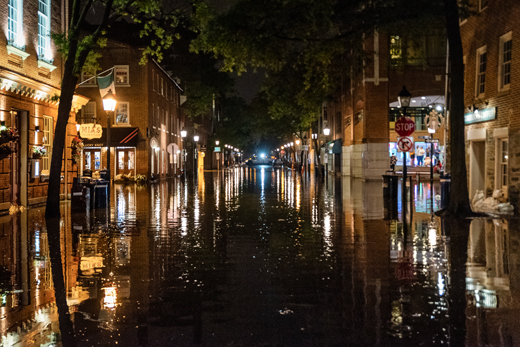
Urban flooding in Alexandria, VA. Image by Geoff Livingston via Flickr; licensed under CC BY-NC-ND 2.0.
What This Means For You
Reduce Flood Risk is a place anyone can come to connect with mitigation information and resources to reduce their flood risk, all in one place. Where a property owner can turn to when their home or business has been flooded, and they are not sure what to do to protect against it happening again. Where a homebuyer can turn if they are looking to purchase a property that may be flood prone. Where a renter can turn to determine what steps they can take to reduce their flood risk. Where a local government official can turn to learn about mitigation strategies that can reduce their community’s flood risk and to find resources on how to better inform property owners about mitigation.
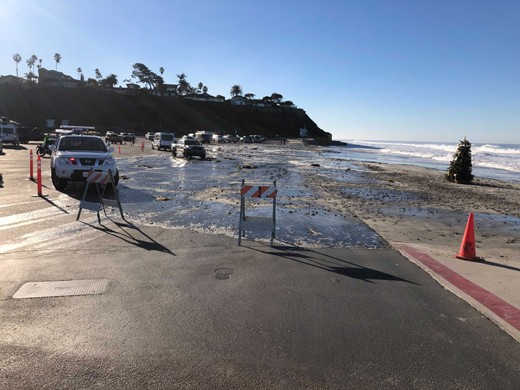
A king tide and high surf caused flooding at the Cardiff State Beach Seaside in Encinitas, CA, in December 2020. Image by Nick Sadrpour | California Sea Grant via Flickr; licensed under CC BY 2.0.
Our Partners
Association of State Floodplain Managers
ASFPM is a scientific and educational nonprofit organization dedicated to reducing flood loss in the nation. The ASFPM Flood Science Center produces state-of-the-science research products in reports and websites to help you understand flood risk and prepare for flood events. Visit floods.org.

Office of the Flood Insurance Advocate
The creation of this website was supported by funding from the Office of the Flood Insurance Advocate (OFIA), Federal Emergency Management Agency (FEMA). OFIA advocates for the fair treatment of National Flood Insurance Program policyholders and property owners. Visit OFIA on FEMA.gov.
Flood Mitigation Library Project Steering Committee
ReduceFloodRisk.org was developed by the ASFPM Flood Science Center in partnership with a project steering committee and a Spanish translation team. Learn more about each project committee here.

ASFPM produced Reduce Flood Risk with the web development expertise of Radish Lab.
 EN
EN  ES
ES