
Mitigation Strategy
Construct an elevated farm pad
Overview
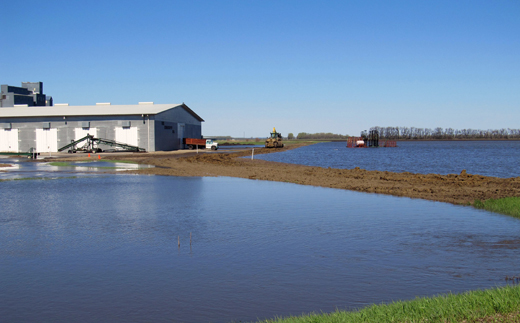
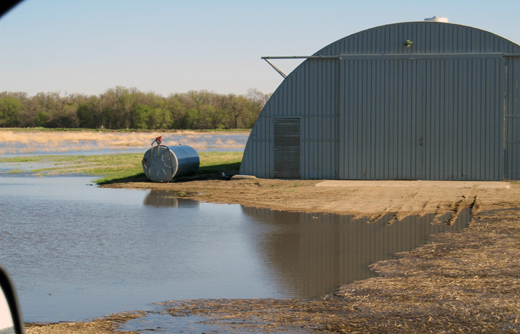
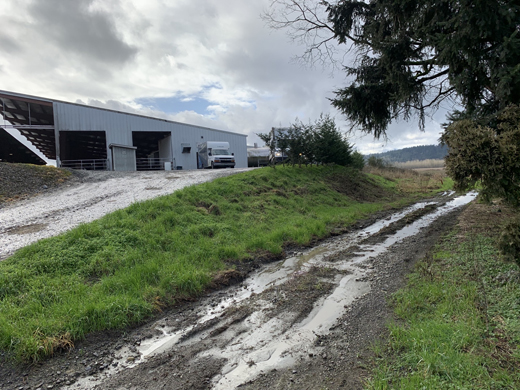
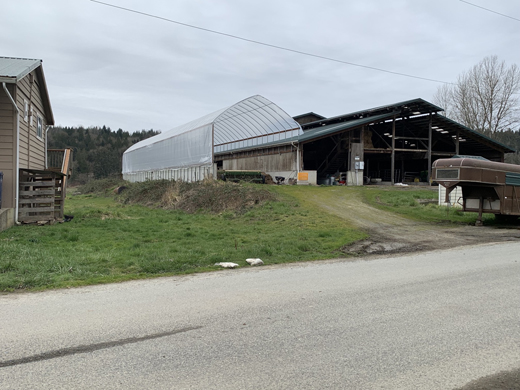
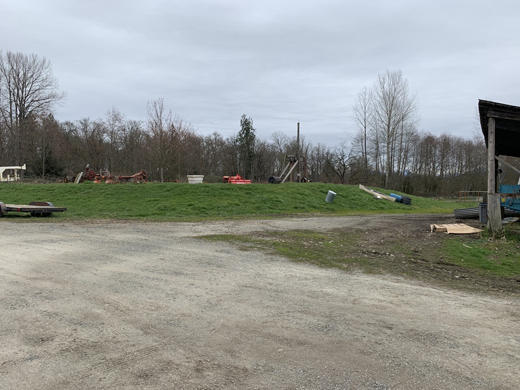
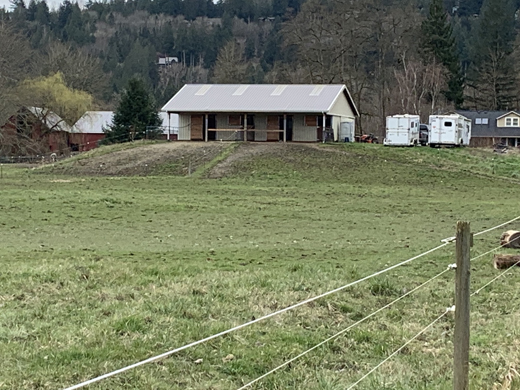
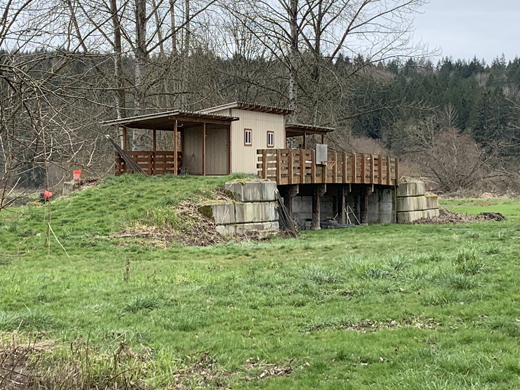
Elevated farm pads – also known as critter pads, livestock and equipment pads, or livestock flood sanctuary mounds – are engineered soil mounds constructed outside of the floodway and above the Base Flood Elevation to house agricultural and accessory structures, such as grain bins, and store livestock, feed, farm machinery, and other agricultural equipment and supplies during a flood. They are a key strategy against flooding for farmers and ranchers whose livelihoods depend on ensuring livestock and equipment are kept out of harm’s way during a flood event. When a flood is imminent, cattle, feed, and critical equipment can be moved to the pad to keep them out of the reach of floodwaters, reducing a farmer’s or rancher’s livestock mortalities and economic losses following a flood event.

When you construct your elevated farm pad, be sure to use the right materials and make sure the fill is properly compacted to support the anticipated load and prevent erosion. Farm pads should be and domed, with engineered side slopes, to allow for water runoff and vehicle access.
This strategy may not be an option in all locales. If you are considering constructing an elevated farm pad, make sure to consult with your local jurisdiction to determine if this option is available to you — and, if so, the requirements you must follow and the support they may be able to provide. Requirements may include: meeting an elevation requirement; a grading and/or floodplain permit; engineering calculations for the permits; construction documentation if you plan on placing a building on the farm pad; and oversight of all construction. Support may include: ideas for possible structures; general engineering advice as to the types of soil and methods of compaction to construct your farm pad; and assistance with permitting and the preparation of a site plan and farm pad drawings.

Property Characteristics
Property Scale
Neighborhood
Single Property
Real Estate Type
Agricultural building
Property Location
Non-coastal
Past Flood Depth
Shallow
Deep
Moderate
Debris Flow Potential
Yes
Implementation Factors
Annual Maintenance Required
Low
Action Required If Flood Is Imminent
No, Passive
Relative Cost
$
$$
$$$
Level of Effort
Professional
DIY

Next Steps:
- Contact your local floodplain manager to determine if an elevated farm pad is permissible on your property. If it is permissible, ask about minimum elevation requirements and any federal, state and local permitting, code or ordinance requirements you will need to follow, before any work starts. If you are not sure who to talk to, check out our “who to contact” page.
- Contact a design and/or engineering professional to help determine potential elevated pad sites and identify design requirements, material requirements, and estimated costs based on desired use(s).
- Apply for proper permits, if required.
- Construct your farm pad. You can do this yourself or hire a professional, depending on your local requirements, level of experience in compacting fill, and the machinery available to you.
Special Considerations:
- This mitigation option type is not recommended within the regulated floodway or in areas with high velocity flooding, where water moves at more than 6 feet per second. If you do not know the projected flood velocity around your property or if your proposed fill site is located in the floodway, check with your local floodplain manager.
- While some states exempt agricultural structures or structures on farms from state and local building and zoning codes, this exemption does not exclude agricultural structures from floodplain management regulations administered by communities that participate in the National flood Insurance Program (NFIP) – which means that if your community or county participates in the NFIP, you must follow federal minimum standards with regards to agricultural and accessory structures. Conversely, if your state or local jurisdiction has more restrictive requirements than the minimum NFIP requirements, those take precedence.
- Be careful not to redirect water flow from your property onto another property. No adverse impact (NAI) floodplain management is an approach that ensures the action of any property owner, public or private, does not adversely impact the property and rights of others. NAI calls for any adverse impact caused by a project to be mitigated as part of the project. By following NAI principles, you can: prevent flooding from increasing or damaging others; see a reduction in flood losses over time; and avoid challenges and lawsuits over causing or aggravating a flood problem.
- Create a disaster plan. Be aware of all actions you will need to take once you receive warning of an oncoming flood event — and how much time each action will take to complete. Actions could include moving farm equipment onto the farm pad, installing flood shields, or closing barrier gates. Annually, inspect all removable pieces to make sure they are in good condition — and you have all necessary parts. Make sure whoever is identified to complete each action in your disaster plan knows how to perform the action, is physically able, and will be onsite. Once everything is in place to protect your home, you should evacuate to higher ground.
- Renters and those who own specific types of property may be limited in which mitigation options they can undertake or have different requirements to which they must adhere. If you are a renter or own any of the following listed property types, click through to learn more: Renter; Unit in a multifamily residence; Manufactured home; Farm/ranch; Historic property; New construction.
Reduce Flood Risk
https://www.reducefloodrisk.org/mitigation/construct-an-elevated-farm-pad/
Printed: 06/06/2026
 EN
EN  ES
ES