
Mitigation Strategy
Install a sump pump with secondary power source
Overview
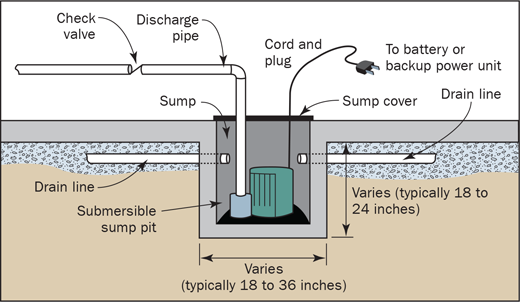
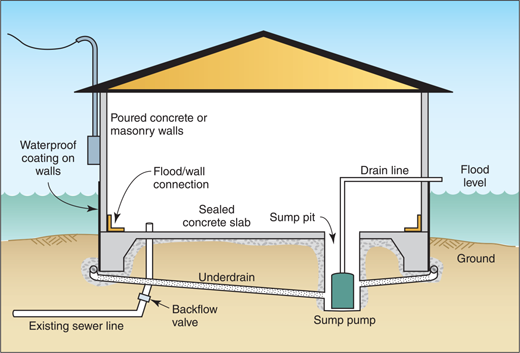
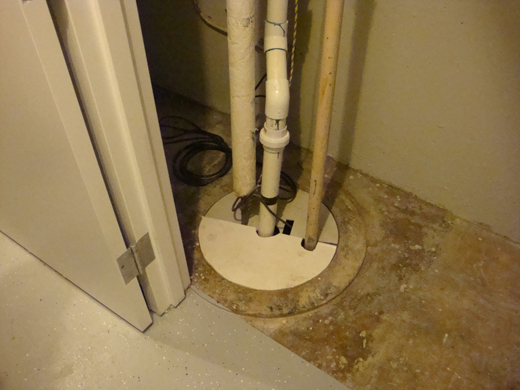
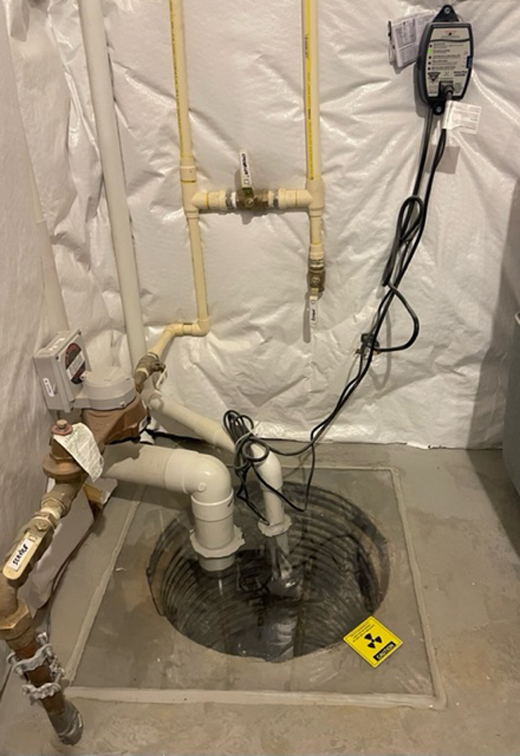
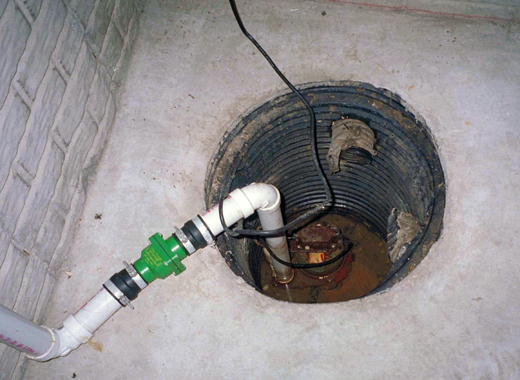
Sump pumps are designed to remove water from below-grade (underground) areas. The hole into which water drains and accumulates is called the sump and is typically lined with stone, a perforated liner, and a filter cloth. The sump pump sits in the sump and pushes water away from your building through a drainage pipe, either into your lot or to the municipal stormwater system. (If your sump pump drains onto your lot, make sure that it discharges far enough away from your building that water does not reenter the structure, and that the water does not affect neighboring properties.)

There are two types of sump pumps – submersible and pedestal. The main components of each are the motor, impeller, and float switch. For a submersible sump pump, the motor and impeller are both located in the sump, underwater; for a pedestal, the motor is located above water, while the impeller is located underwater. Both types of sump pumps automatically activate via a float switch when water enters the sump, and both require electricity to operate – which means they are susceptible to power outages and may short-circuit under certain conditions. (Submersible sump pumps are less likely to short-circuit due to their waterproof wiring.) To avoid a sump pump malfunction, it is best to choose a device that is self-priming and has a battery- or generator-operated backup.
Other mitigation options should be used along with sump pumps since they are designed only to remove a low volume of water at a slow rate. In situations where high floodwaters inundate a structure and last for more than 12 hours, your sump pump will likely be ineffective and may stop working. You can use a portable sump pump, however, to manage the force of water acting on basement walls as you drain your basement of water, post-flood. Use caution and wait until floodwaters have subsided and soils are no longer saturated before draining the basement, as serious structural damage, such as cracked or collapsed walls and floors, can occur if you drain the basement too early.
Sump pumps should be annually inspected and maintained to ensure they have not filled with sediment and debris, which can cause the system to malfunction – usually due to an obstructed float switch or a blocked intake or impeller. Since flood insurance does not cover damage to your basement from a malfunctioning sump pump, you may want to acquire secondary insurance to cover water damage due to sump pump failure, which is available from some private insurance companies.

Property Characteristics
Property Scale
Single Property
Real Estate Type
Single-family residence
Business
Government building
Foundation Type
Slab-on-Grade
Crawlspace
Basement
Property Location
Non-coastal
Past Flood Depth
Moderate
Shallow
Deep
Debris Flow Potential
Yes
Structure Condition
Fair-to-excellent condition
Less than fair condition
Implementation Factors
Annual Maintenance Required
Low
Action Required If Flood Is Imminent
Yes, Active
Relative Cost
$
$$
$$$
Level of Effort
Professional
DIY
Next Steps:
- If an existing sump pump is being replaced, the process is fairly easy to conduct as a DIY project. A variety of sump pumps are available from most home improvement stores and the pumps come with step by step installation instructions. Battery backup pumps or connection to a generator circuitry should be considered when selecting a pump.
- If a new sump pump system is being installed, it is recommended that a licensed plumber who is certified in basement waterproofing be hired for the design and installation.
- The installation of a new sump, sump pump, interior water collection piping, and discharge system may require a permit for installation. Check with your local building officials or licensed plumber to determine if a permit is required.
- If removing water that is penetrating through an opening barrier into a structure, a floor skimmer can be purchased or rented for use in removing the water.
Special Considerations:
- Portable sump pumps can be purchased or rented, with some types designed as floor skimmers to assist in removing floodwater from areas without a sump. If you are looking to purchase a flood mitigation pump, check to see if the product you are looking to install meets the ANSI 2510 standard.
- Ensure compliance with all applicable National Flood Insurance Program requirements and local building codes. The NFIP sets minimum standards and allows individual communities to adopt their own additional or more stringent requirements via local floodplain management ordinances, regulations, and laws.
- If your building sustained substantial damage during a recent flood event, you may be required to bring it into compliance with NFIP and local floodplain management regulations.
- Be careful not to redirect water flow from your property onto another property. No adverse impact (NAI) floodplain management is an approach that ensures the action of any property owner, public or private, does not adversely impact the property and rights of others. NAI calls for any adverse impact caused by a project to be mitigated as part of the project. By following NAI principles, you can: prevent flooding from increasing or damaging others; see a reduction in flood losses over time; and avoid challenges and lawsuits over causing or aggravating a flood problem.
- Contact a local flood insurance representative to learn more and get a quote, if you do not already have flood insurance. (Most homeowner’s insurance policies do not cover flood damage.)
- Renters and those who own specific types of property may be limited in which mitigation options they can undertake or have different requirements to which they must adhere. If you are a renter or own any of the following listed property types, click through to learn more: Renter; Unit in a multifamily residence; Manufactured home; Farm/ranch; Historic property; New construction.
Reduce Flood Risk
https://www.reducefloodrisk.org/mitigation/install-a-sump-pump-with-secondary-power-source/
Printed: 06/10/2026
 EN
EN  ES
ES