
Mitigation Strategy
Install an exterior French drain
Overview
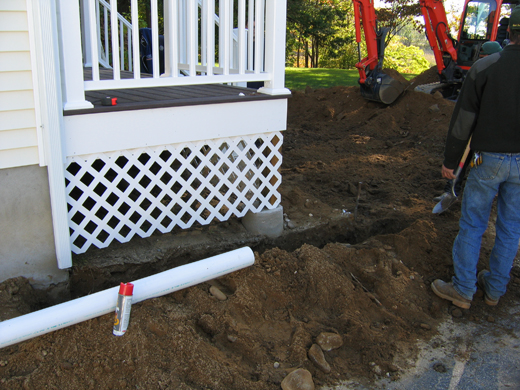
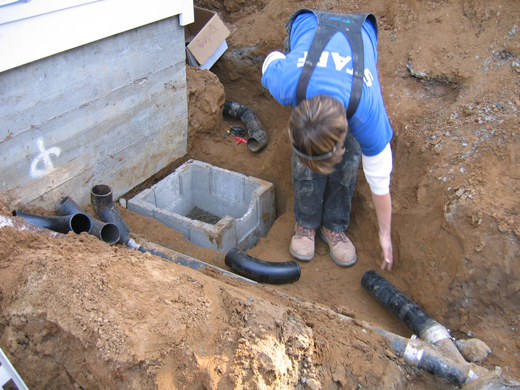
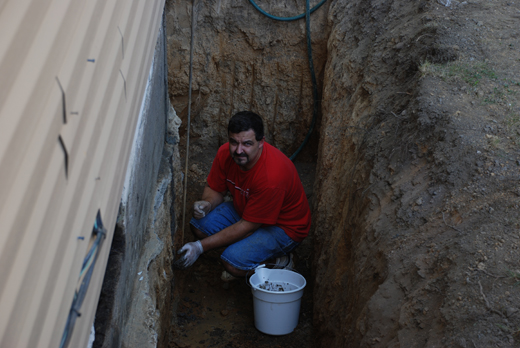
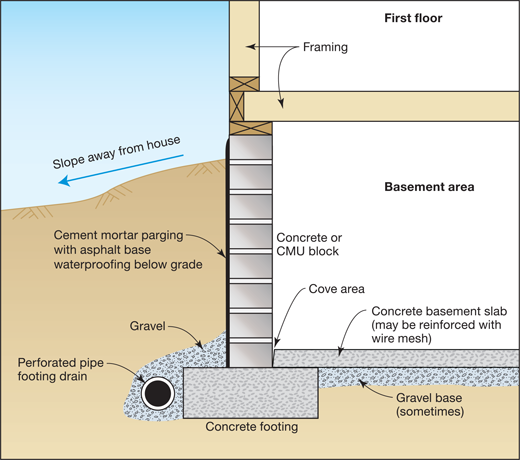
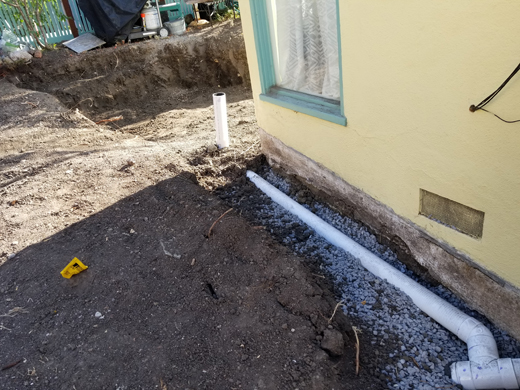
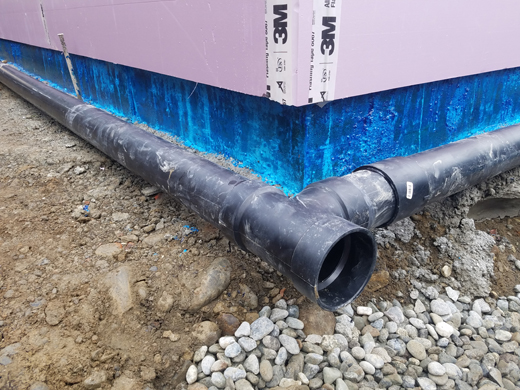
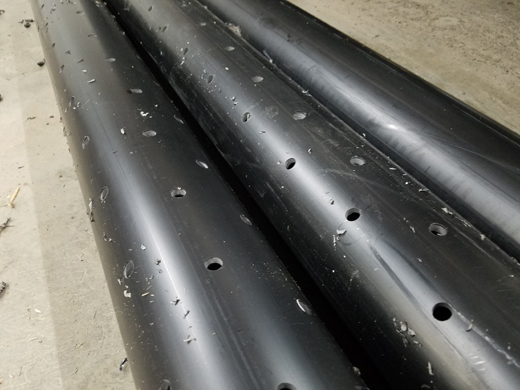
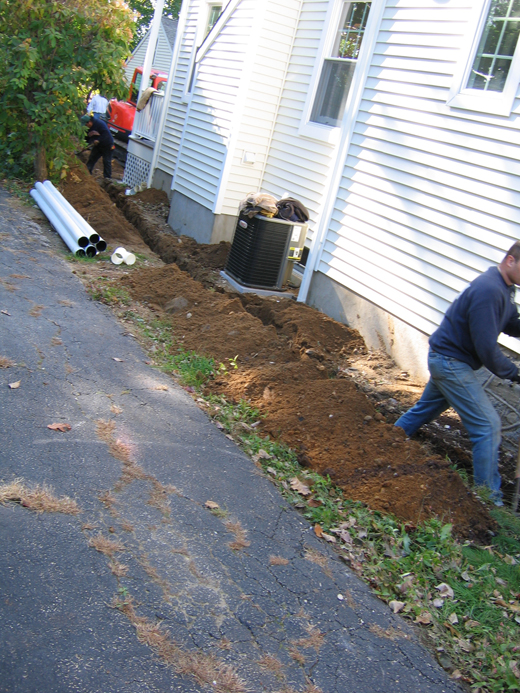
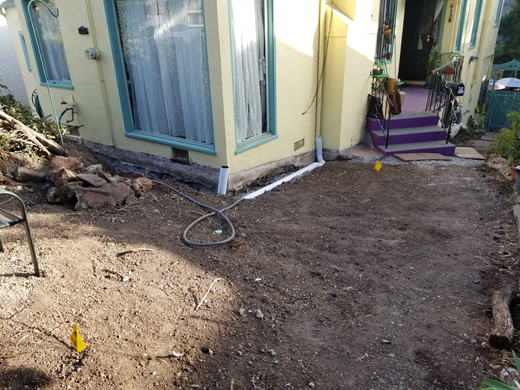
An exterior French drain, also known as a drain or weeping tile, is a type of drainage system that runs alongside a building’s foundation to prevent water from entering and accumulating within the structure. It is typically a small trench that has been fitted with a plastic perforated pipe, lined with filter fabric, and backfilled with gravel. The gravel collects and filters the excess water from saturated soil next to the foundation while the perforated pipe carries it away from the building. Together, they reduce water pressure against the foundation walls – which if left unaddressed can cause seepage problems along your building’s foundation and, in extreme cases, cause walls to fail.

French drains should be placed deep enough to ensure that any water that might infiltrate the foundation is captured and directed to flow away from the house. French drains typically reroute water to a low point on your property from which a single drain line carries the water to an open stream, municipal stormwater infrastructure, a dry well, or a sump pump. If your French drain is routed to a municipal stormwater system, you should be aware that during a heavy rainfall event or when the water table is high, water can back up into the French drain – toward your building foundation — rather than carrying water away.
French drains work best for properties adjacent to the floodplain that do not flood often and where floodwaters may rise quickly but are still relatively shallow. Note that French drains should not drain towards hillsides as the excess water could make the ground unstable and trigger a landslide. Lastly, since French drains can clog and collapse over time, like any flood prevention tool, you should regularly inspect your drain to ensure it is in good working order.

Property Characteristics
Property Scale
Single Property
Real Estate Type
Single-family residence
Business
Government building
Foundation Type
Slab-on-Grade
Crawlspace
Basement
Property Location
Non-coastal
Past Flood Depth
Moderate
Shallow
Debris Flow Potential
Yes
Structure Condition
Fair-to-excellent condition
Less than fair condition
Implementation Factors
Annual Maintenance Required
Low
Action Required If Flood Is Imminent
No, Passive
Relative Cost
$$$
$$$$
Level of Effort
Professional
DIY
Next Steps:
- Identify if your building has a French drain. If you do not know how to identify a French drain on your own, you can contact a local professional plumber or contractor.
- If you have an existing French drain, ask your local licensed professional the following questions: Are there any blockages? Can the blockages be easily flushed? If they cannot be flushed or if a portion of the French drain has collapsed, can they repair the existing French drain or will a new system need to be installed? What is the discharge point for the French drain?
- If you find that your building does not have a French drain or has an older French drain in need of replacement, consider having a modern perforated plastic French drain installed by a professional plumber or contractor – and make sure to ask about the possibility of including a cleanout port with surface access installed for ease of maintenance. If you have the knowledge, you may be able to install your own French drain; hiring a professional, however, is recommended.
- Contact your local floodplain administrator to ask about necessary permits before any work starts.
Install the new French drain.
Special Considerations:
- Ensure compliance with all applicable National Flood Insurance Program (NFIP) requirements and local building codes. The NFIP sets minimum standards and allows individual communities to adopt their own additional or more stringent requirements via local floodplain management ordinances, regulations, and laws.
- Be careful not to redirect water flow from your property onto another property. No adverse impact (NAI) floodplain management is an approach that ensures the action of any property owner, public or private, does not adversely impact the property and rights of others. NAI calls for any adverse impact caused by a project to be mitigated as part of the project. By following NAI principles, you can: prevent flooding from increasing or damaging others; see a reduction in flood losses over time; and avoid challenges and lawsuits over causing or aggravating a flood problem.
- Renters and those who own specific types of property may be limited in which mitigation options they can undertake or have different requirements to which they must adhere. If you are a renter or own any of the following listed property types, click through to learn more: Renter; Unit in a multifamily residence; Manufactured home; Farm/ranch; Historic property; New construction.
Reduce Flood Risk
https://www.reducefloodrisk.org/mitigation/install-an-exterior-french-drain/
Printed: 06/10/2026
 EN
EN  ES
ES