
Mitigation Strategy
Install an opening barrier
Overview
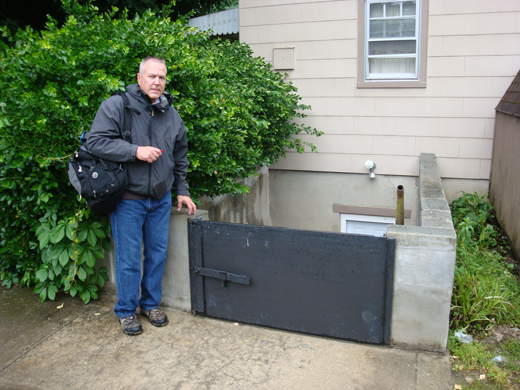
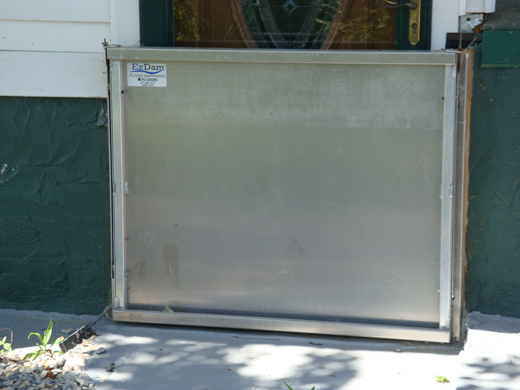
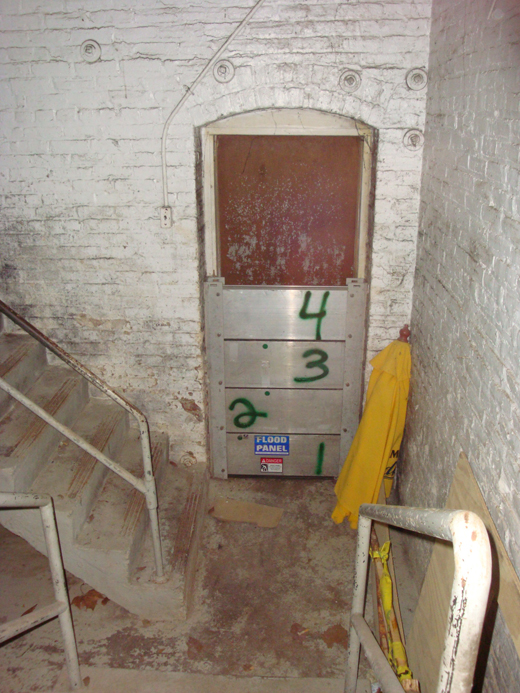
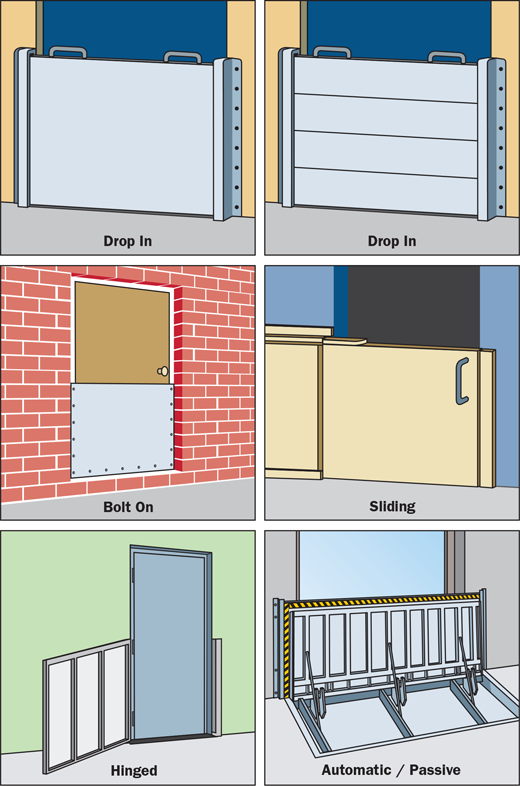
Opening barriers are panels, plates, doors, or other barriers used to prevent floodwaters from entering a structure via an opening in a wall, such as a doorway or window. They are one aspect of the flood prevention technique known as dry floodproofing, which aims to prevent a structure from flooding (i.e., keep it dry) by blocking floodwaters from entering. Opening barriers include flood shields, flood panels, flood doors, flood planks, and more, and are typically made of metal or wood. They are generally only used when flooding is expected to be less than three feet. The type of opening barrier used depends upon the size of the opening that needs to be protected and the expected duration of flooding.

For short-duration flooding and smaller openings, panel-style opening barriers of sturdy material, such as aluminum, can be purchased or constructed to fit doorways and other openings. These barriers will only be watertight if a flexible gasket or sealant is used, and the mounting hardware is designed to apply even pressure on the gasket around the opening. While not recommended, if aluminum or other metal opening barriers are not available or out of your price range, marine-grade plywood can be used. Note, however, that plywood will collapse under relatively low flood forces and usually requires significant reinforcement. If you choose to use plywood, between flood events, examine the plywood and replace any deteriorated or warped panels.
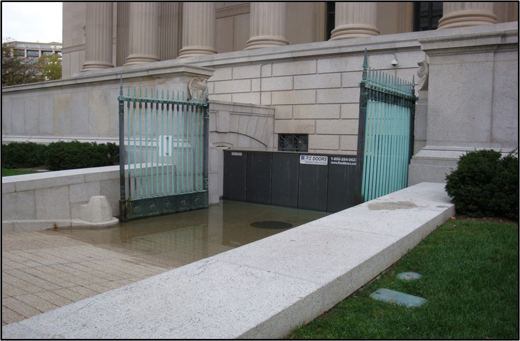
For larger openings, such as parking garage entrances, opening barriers are normally constructed of steel or heavy aluminum plates and are on rollers or hinged to swing into place, due to their weight. These are mostly used in commercial spaces.
Opening barriers on windows and doorways require adequate warning time for installation, as well as someone who knows how, is physically able, and is onsite to install them correctly. Many opening barriers rely on the installation of permanent features, such as mounting hardware, well in advance of a flood. The hardware should be mounted to the side of the opening that water will come in contact with, so that the structure can help to resist the force of floodwater.
Once these permanent features are installed, additional action must be taken to install temporary pieces when a flood warning is issued, such as swinging a door into place and securing it, or pulling out, installing, and securing a panel(s). Although having to take action right before a flood may be burdensome (or risky if you are not at home when action is required), opening barriers with this design allow for full use of the opening when flooding is not imminent. Temporary pieces should be removed once floodwaters have receded and stored indoors in an accessible area so they can be easily reached when needed.
An annual inspection of flood shields is recommended to ensure that they fit properly and that the gaskets and seals are in good working order with no tears or decay. While inspecting, you also should review how to install them.

Property Characteristics
Property Scale
Single Property
Neighborhood
Real Estate Type
Single-family residence
Business
Government building
Foundation Type
Slab-on-Grade
Crawlspace
Basement
Property Location
Non-coastal
Past Flood Depth
Shallow
Deep
Moderate
Debris Flow Potential
Yes
Structure Condition
Fair-to-excellent condition
Implementation Factors
Annual Maintenance Required
Low
Action Required If Flood Is Imminent
Yes, Active
No, Passive
Relative Cost
$
$$
$$$
$$$$
$$$$$
Level of Effort
Professional
DIY
Next Steps:
- Consult a professional engineer to see if an opening barrier is a good option for your property. Have them determine the structural soundness of your building, including the walls and the floor slab. Are they able to resist anticipated floodwaters and flood-related loads? If so, which type of opening barrier is the best fit for your structure?
- Check to make sure that the recommended barrier has been tested and certified via the Flood Mitigation Certification Program.
- Install the barrier.
Special Considerations:
- Some seepage should always be anticipated and prepared for with a well-developed dewatering system, such as a sump pump.
- If your structure is in less than fair condition, this mitigation option type is not recommended. The only mitigation option types recommended for structures in less than fair condition are acquisition, demolition, and the purchase of flood insurance or business interruption insurance.
- Opening barriers can be certified. Check to see if the product you are looking to install meets the ANSI 2510 standard.
- Ensure compliance with all applicable National Flood Insurance Program (NFIP) requirements and local building codes. The NFIP sets minimum standards and allows individual communities to adopt their own additional or more stringent requirements via local floodplain management ordinances, regulations, and laws.
- If your building sustained substantial damage during a recent flood event, you may be required to bring it into compliance with NFIP and local floodplain management regulations.
- Create a disaster plan. Be aware of all actions you will need to take once you receive warning of an oncoming flood event — and how much time each action will take to complete. Actions could include installing flood shields, closing barrier gates, or lowering storm shutters. Annually, inspect all removable pieces to make sure they are in good condition — and you have all necessary parts. Make sure whoever is identified to complete each action in your disaster plan knows how to perform the action, is physically able, and will be onsite. Once everything is in place to protect your home, you should evacuate to higher ground.
- Contact a local flood insurance representative to learn more and get a quote, if you do not already have flood insurance. (Most homeowner’s insurance policies do not cover flood damage.)
- Renters and those who own specific types of property may be limited in which mitigation options they can undertake or have different requirements to which they must adhere. If you are a renter or own any of the following listed property types, click through to learn more: Renter; Unit in a multifamily residence; Manufactured home; Farm/ranch; Historic property; New construction.
Reduce Flood Risk
https://www.reducefloodrisk.org/mitigation/install-an-opening-barrier/
Printed: 06/10/2026
 EN
EN  ES
ES