
Mitigation Strategy
Protect non-movable items
Overview
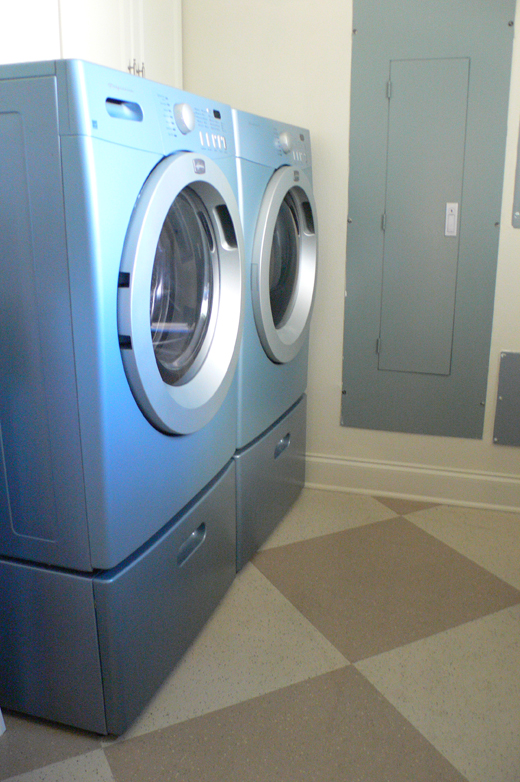
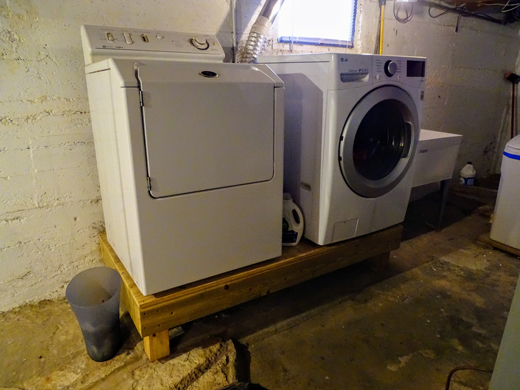
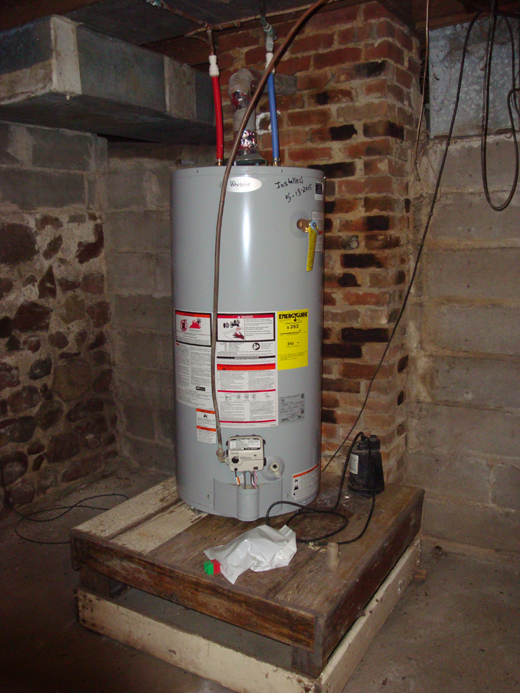
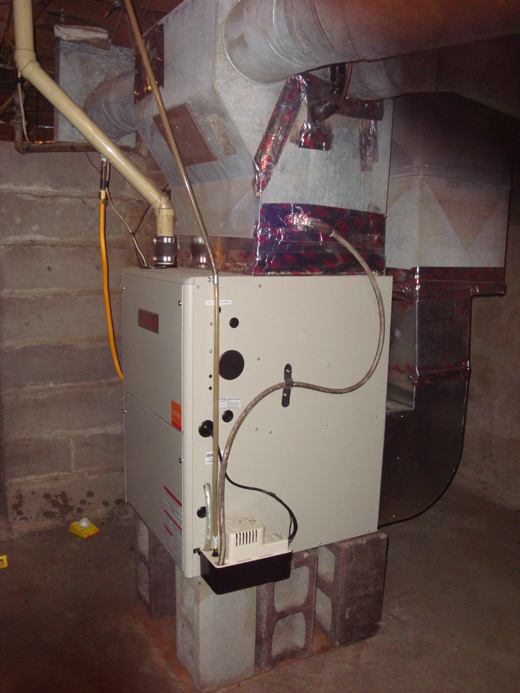
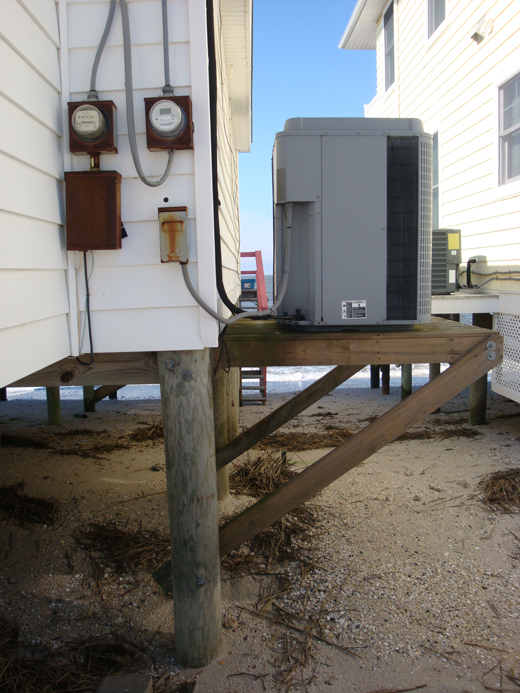
Relocating, elevating, or otherwise protecting utilities, large appliances, and other non-movable items is a key part of floodproofing. While it’s easy enough to simply move most smaller contents out of harm’s way by placing them onto shelves, hooks, or countertops above the expected flood height, protecting utilities, building systems, and other non-movable items, against floodwaters requires advanced planning and often the help of a qualified contractor. Some examples of non-movable items are HVAC systems (including outside compressors), furnaces, water softeners, washers and dryers, water heaters, refrigerators, freezers, ovens, stoves, and electrical outlets and switches.
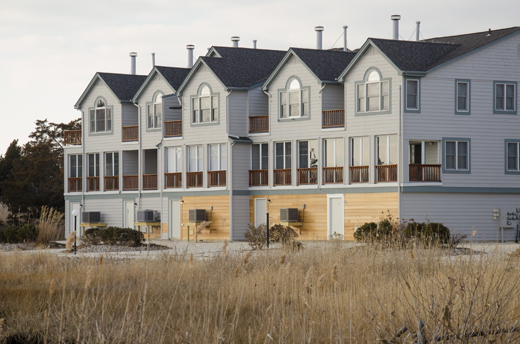
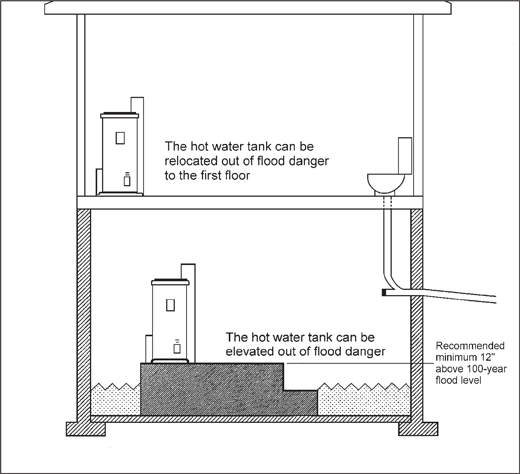
Relocating, elevating, or protecting these items in-place are the best ways to protect them from flood damage. These actions can help you avoid the need for full system replacements and improve your ability to move back into your home or reopen your business post-flood. The best time to relocate or elevate utilities and other non-movable items is during construction, renovations, or repairs.
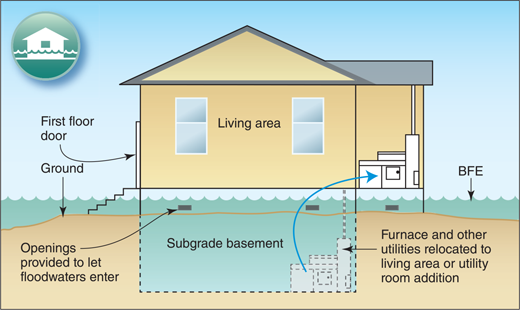
- Relocation. You can have a separate storage building or addition to your existing building constructed above the design flood elevation to house utilities, mechanical equipment, or other non-movable items in a location on your property with a lower risk of flooding.
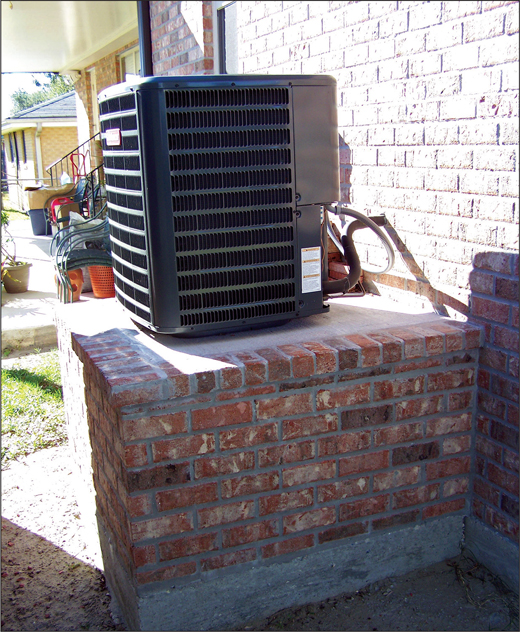
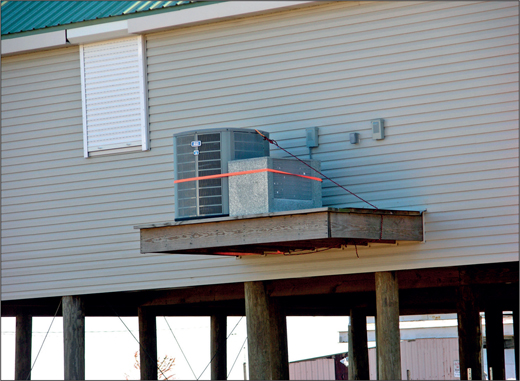
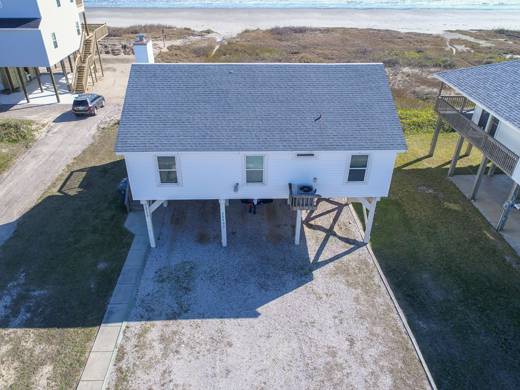
- Elevation. You can have a sturdy platform, pedestal, or shelf made of flood damage-resistant material installed onto the exterior of your home or building, and secure your non-moveable items on the platform. The platform should be installed above the design flood elevation, and should be securely attached to a structural support that can withstand flooding. Non-moveable items that can be stored on exterior platforms include machinery, utility system components (particularly electrical equipment), and fuel and storage containers.
- Protection. You can protect items that are difficult to relocate or elevate with in-place protection alternatives, such as protective coatings, floodproof bags, anchors, tie-downs, and waterproof enclosures (low barriers or flood shields). Protective coatings and floodproof bags can be applied to equipment to reduce flood damage and make cleanup easier following a flood. Anchors and tie-downs can be installed to prevent flotation and lateral movement. Waterproof enclosures, like low barriers and flood shields, can be purchased or constructed to prevent shallow floodwaters from infiltrating low-sitting equipment. (Note that these protection measures are forms of wet floodproofing.)
Wet floodproofing allows water into a building while protecting the structure, contents and building systems from major damage. This type of floodproofing offers flexibility, as it can be done in stages. However, wet floodproofing is best done well in advance of a flood, and in combination with other strategies to minimize or prevent flood damage. Also, a wet floodproofed structure still experiences the ordeal and expense of flooding – after the flood, cleanup, decontamination, and drying time are still necessary.



Property Characteristics
Property Scale
Single Property
Real Estate Type
Single-family residence
Business
Government building
Foundation Type
Slab-on-Grade
Crawlspace
Basement
Open Foundation
Property Location
Any
Past Flood Depth
Deep
Moderate
Shallow
Debris Flow Potential
Yes
Structure Condition
Fair-to-excellent condition
Implementation Factors
Annual Maintenance Required
Low
Action Required If Flood Is Imminent
No, Passive
Relative Cost
$
$$
$$$
$$$$
Level of Effort
Professional
DIY
Next steps:
- Consult your local floodplain administrator to find out what requirements or restrictions (if any) apply to your property, including the Base Flood Elevation and whether you will need a permit to incorporate wet floodproofing measures.
- Engage a registered design professional who can assist you in developing a plan to address those items that can easily be protected from flooding.
- Work with a qualified contractor to have items that require special consideration (such as utilities, large appliances or other non-moveable) relocated, elevated, or protected in-place.
Special Considerations:
- If your structure is in fair to poor condition, this mitigation option type is not recommended. The only mitigation option types recommended for structures in fair to poor condition are acquisition, demolition, and the purchase of flood insurance or business interruption insurance.
- Ensure compliance with all applicable National Flood Insurance Program (NFIP) requirements and local building codes. The NFIP sets minimum standards and allows individual communities to adopt their own additional or more stringent requirements via local floodplain management ordinances, regulations, and laws. Under the NFIP, wet floodproofing for structures located in the Special Flood Hazard Area (SFHA) is allowed only in limited situations.
- Create a disaster plan. Be aware of all actions you will need to take once you receive warning of an oncoming flood event — and how much time each action will take to complete. Actions could include unplugging appliances, installing flood shields, or closing barrier gates. Annually, inspect all removable pieces to make sure they are in good condition — and you have all necessary parts. Make sure whoever is identified to complete each action in your disaster plan knows how to perform the action, is physically able, and will be onsite. Once everything is in place to protect your home, you should evacuate to higher ground.
- Contact a local flood insurance representative to learn more and get a quote, if you do not already have flood insurance. (Most homeowner’s insurance policies do not cover flood damage.)
- Renters and those who own specific types of property may be limited in which mitigation options they can undertake or have different requirements to which they must adhere. If you are a renter or own any of the following listed property types, click through to learn more: Renter; Unit in a multifamily residence; Manufactured home; Farm/ranch; Historic property; New construction.
Reduce Flood Risk
https://www.reducefloodrisk.org/mitigation/relocate-elevate-or-otherwise-protect-utilities-large-appliances-and-other-non-movable-items/
Printed: 06/10/2026
 EN
EN  ES
ES